
Major Chewang Rinchen became the youngest recipient of the Maha Vir Chakra. He not only seized the highest post ever captured, but also liberated an area of 800 sq km from Pak occupied Kashmir, the largest area captured in the 1971 war with hardly any supplies and no artillery support. Claude Arpi salutes this brave Indian soldier.
The problem is that nations or states are always ready to 'share' water with others living upstream, but their perception changes when the question comes to 'sharing' with lower riparians, says Claude Arpi after attending a 3-day conference in New Delhi on conflict resolution in the faceoff over water
Chinese Vice President Xi Jinping, who will takeover as president next year, seems to have realised that the past policy of repression can't solve the long-pending Tibetan issue, says Claude Arpi.
Ladakh MP Thupstan Chhewang on Chinese incursions, the environment and effects of global warming in Ladakh and the relations between the Muslim and Buddhist populations.
'His presence in Tawang is a silent reiteration that the McMahon Line was and is the border between Tibet and India,' says Claude Arpi.
Claude Arpi asks if Beijing has what it takes to be recognised as a superpower.
Mukherjee will brief Natwar Singh on the situation in Nepal.
As the Dalai Lama turns 75 on July 6, he speaks about the importance of the Indian tradition of Nalanda, the differences between Buddhist science, philosophy and religion and why he believes that a 'sort' of cultural genocide is happening in Tibet.
Professor Robert Thurman, senior scholar at Columbia University and one of the Dalai Lama's oldest supporters, speaks to Claude Arpi about his relations with the Tibetan spiritual leader, the present state of capitalist' China, the Buddhist wave in the West, his idea of a Second Renaissance and his work for preserving Indian shastras.
As Chinese celebrate the People's Republic of China's 60th anniversary, Claude Arpi explores the rise of the dragon from the days of the Cultural Revolution to its projection of itself as a soft superpower in the modern world.
General N C Vij who is expected to meet his Chinese counterpart and the defence minister of the Communist giant, said he was hopeful the talks would help in giving further boost to bilateral ties.
'One of the most decisive factors in the Tibetan issue is this newly found interest for Buddhism in China.'

China on Thursday said it 'firmly opposes' the United States recognition of Arunachal Pradesh as part of Indian territory and affirmed that Washington, DC has nothing to do with the India-China border dispute.
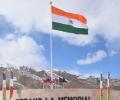
Visiting the Rezang La Memorial, one has a feeling of super-humans defending the Indian territory against the Chinese onslaught, says Claude Arpi on the 60th anniversary of the heroic battle of the 1962 War.

It is on the exact spot where the Guru is said to have created 108 waterfalls, that the Yangtse clash took place between the Indian Army and the Chinese PLA on the night of December 9, 2022. As it had done in Ladakh in May 2020, the PLA tried to change the unmarked LAC in the Yangtse sector in Arunachal Pradesh. It was the most serious border incident since the Galwan Valley clash in June 2020, notes Claude Arpi.

Arpi deserves to be complimented for the commitment and hard work that have gone into this production. The frustrations of seeking reliable documentation from the catacombs of the Indian bureaucracy did not deter him from going after the best information available, and the result is one that he can take much satisfaction in. Ambassador Prabhat P Shukla, Member Advisory Council, Vivekananda International Foundation, reviews Claude Arpi's The End of an Era: India Exits Tibet.

'China wants to change the status quo of India's Northern Border and proves that it can do whatever it wants in what it perceives as its own territory,' states Claude Arpi.
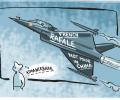
The Made in France Rafales are clearly not the best advertisement for Modi's Atmanirbhar agenda, but as long as none of its parts have Made in China embossed on them, we guess it is chaal se as the Amadavadis would say.

'It is a breathtaking journey towards the Tibet border, especially since the Border Road Organisation has accomplished a fabulous feat in black-topping the road till the border.' 'One is left with a salute for the dauntless Indian soldiers who spend the winter in these majestic, though inhospitable areas (we were told that the temperature comes down to minus 40 in winter),' recounts Claude Arpi.

Did Vinod Sehgal die in Tsangdgar or was he taken PoW to Tibet or China? Why has the IAF kept so quiet for all these years, asks Claude Arpi.

Often when I meet a new Indian friend, who is not aware of my background, he exclaims: "So many years in India! but why, why? I can't understand! My dream is to go to the States or Europe and you are living in 'this' country!" Claude Arpi, who was born a Frenchman, looks back on his 40 years in India.

'The Weather Channel argues that India faces the gravest challenge: Climate change-induced health vulnerability.' 'This is an issue often neglected, alerts Claude Arpi: "Prolonged summers, unpredictable rains, floods, droughts, and rising sea levels are the harsh realities of climate change in the country. These factors increase the frequency and severity of illnesses, pushing people into poverty, and forcing migration".'

'It is flabbergasting to think that this heavenly region has, for decades, been coveted by India's aggressive neighbours,' says Claude Arpi after a recent visit to Ladakh. 'Wanting to use the newly created infrastructure to defend the borders after the clash of 2020 with China and the resulting standoffs, the home ministry is keen to boost border tourism to show that these areas are controlled by India.'
India's reaction came in response to Beijing announcing Chinese names for 15 more places in Arunachal Pradesh which the neighbouring country claims as South Tibet.

'It appears that Prime Minister Modi has to undo 50 years of State monopoly in the defence sector during which public undertakings like HAL or DRDO monopolised defence production and development with disastrous consequences.'

India was fooled into believing that Communist China wanted a 'negotiated' settlement with the Tibetans; it was never the case, says Claude Arpi.

The Chinese admitted that they had suffered the maximum casualties fighting in the first battle on October 20, 1962, and these casualties had been inflicted mostly by 2 Rajput. Claude Arpi salutes Major B K Pant and his fighting force of 112 men, 82 of whom lost their lives in the Battle of Namkha Chu, and whose courage must never ever be forgotten by a grateful country for who they laid down their lives.

Though General Naravane's visit will not deal with 'impermanent' issues like the changing stands of politicians, it will certainly reinforce the deeper 'permanent' links between the people of Nepal and India. Time will hopefully tackle the present impermanence of the Sino-Nepalese romance, notes Claude Arpi.
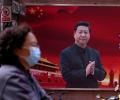
China has not limited the 'battle' to the diplomatic field alone; the People's Liberation Army has become aggressive on the ground too. The recent 'fights' in Northern Sikkim and Ladakh are part of the pattern, asserts Claude Arpi.

Why is China's supreme leader promoting Han Chauvinism so aggressively, asks Claude Arpi.
Prime Minister Narendra Modi's visit to Arunachal Pradesh on Friday, February 20, irritated the Chinese government so much that it summoned the Indian ambassador to register its protest against Modi visiting a territory China claims as Southern Tibet.
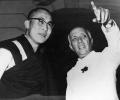
One priority for Delhi (for the new foreign secretary in particular) is to have an in-depth discussion with Dharamsala as soon as possible, suggests Claude Arpi.

The Tibetan nation still lives under the yoke of the Chinese Communist Party, and Beijing today has a guilty conscience; this creates a great uneasiness for Xi Jinping and his colleagues observes Claude Arpi.
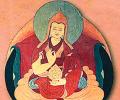
Tawang is very much a part of India, and if the present Dalai Lama decides one day to take rebirth in Tawang, the Indian government will openly welcome him and support him, notes Claude Arpi.
India will pay China over Rs 82 lakh annually for crucial flood data of the Brahmaputra to improve flood forecasting even as the two sides agreed to allow their water experts to conduct study tours on both sides of the river which originates in Tibet.
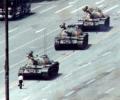
Why omit the Tiananmen massacre from the history of China's Communist party, asks Claude Arpi.
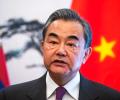
Was Wang Yi'S visit intended to remind India of 1962, asks Claude Arpi?
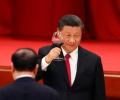
After the Ladakh fiasco where Xi Jinping did not expect the Indian Army to resist his land-grabbing tactics, he has to save face before his colleagues in the Communist party.' To bring the threat of a mega-dam to the northern Indian border is a clever move, observes Claude Arpi.

'Whether I die in Calcutta or in Paris, on a Wednesday or a Saturday, it does not matter, but you would not want me to come to India's door and then return to France without having visited India.' 'Either I will die or I will visit India!' Claude Arpi hails Georges Clemenceau, French prime minister during the Great War, a great man who loved India.
